PKMF · CAMP REPORT 13 December 2025
Care in the Rwenzori hills
 Paddy Kabagambe
Buhatiro · 13 December 2025
Expanded report · September 2026 · Complete source-based reading edition
Use the Chapter menu or enter a page number to move directly to a section. The complete edition can also be read continuously or printed.
| Section | Page |
|---|---|
| Executive summary | 4 |
| 01 · Reaching Buhatiro | 5 |
| 02 · Preparation | 6 |
| 03 · Service delivery | 8 |
| 04 · The day in numbers | 10 |
| 05 · Reported findings | 13 |
| 06 · People and delivery | 18 |
| 07 · Lessons | 19 |
| 08 · Continuing care | 21 |
| The camp in photographs | 25 |
| Section | Page |
|---|---|
| Acknowledgements | 32 |
| Conclusion | 33 |
The one-day camp at Buhatiro on 13 December 2025 registered 342 people. It combined outpatient consultation, blood pressure and blood sugar screening, health education, medicines and referral advice in a community with difficult access to routine care.
The source records 318 BP entries, including 315 complete pairs, and 306 blood sugar readings. It documents 443 diagnosis entries across up to three fields per client; 99 clients had at least two diagnoses recorded.
Rain, difficult roads and incomplete documentation were the main reported challenges. Recommendations focus on continuing care, medicine adherence, referral coordination, safer transport and better records. This edition includes all source result tables and recommendations; it does not turn proposed follow-up into completed outcomes.
Kiyonga Medical Camp Report, 13 December 2025, version 2.
On 13 December 2025, a one-day medical camp was held at Buhatiro Trading Center, Bulhumbi Village, Buhatiro Parish, Ihandiro Sub-county, Bukonzo West Constituency, Kasese District.
The site was selected to reach a community deep in the Rwenzori mountains where routine access to medical services is difficult. The camp offered essential outpatient care, screening, health education and referrals.
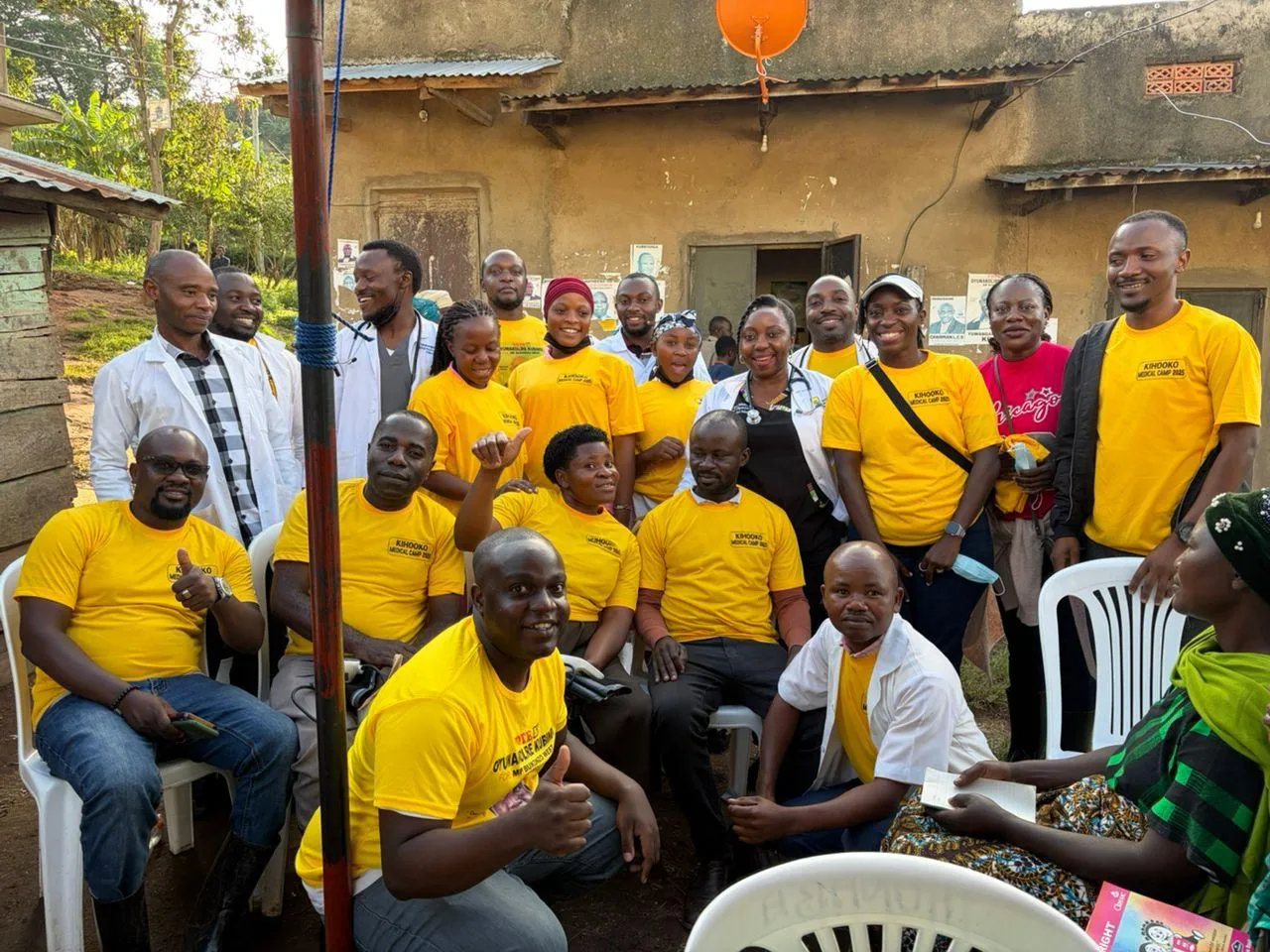
The camp report was prepared by the Kiyonga Medical Camp Team, bringing together members of the Kiyonga and Kabagambe families and health professionals.
Kiyonga Medical Camp Report, 13 December 2025, introduction.
The report records approvals from the Kasese District Health Officer and the Uganda Medical and Dental Practitioners’ Council. Local leaders were engaged in preparatory discussions.
Radio announcements, community sensitisation and village mobilisers helped residents learn about the date and venue. Door-to-door reminders supported the outreach.
Health workers came from Bwera Hospital, Kasanga PHC III and Mbarara Regional Referral Hospital. Planning meetings brought together the clinical, screening and dispensing teams.
2025 report, mobilisation and workforce.
Medical camp event folder, matched to 2025 report context.
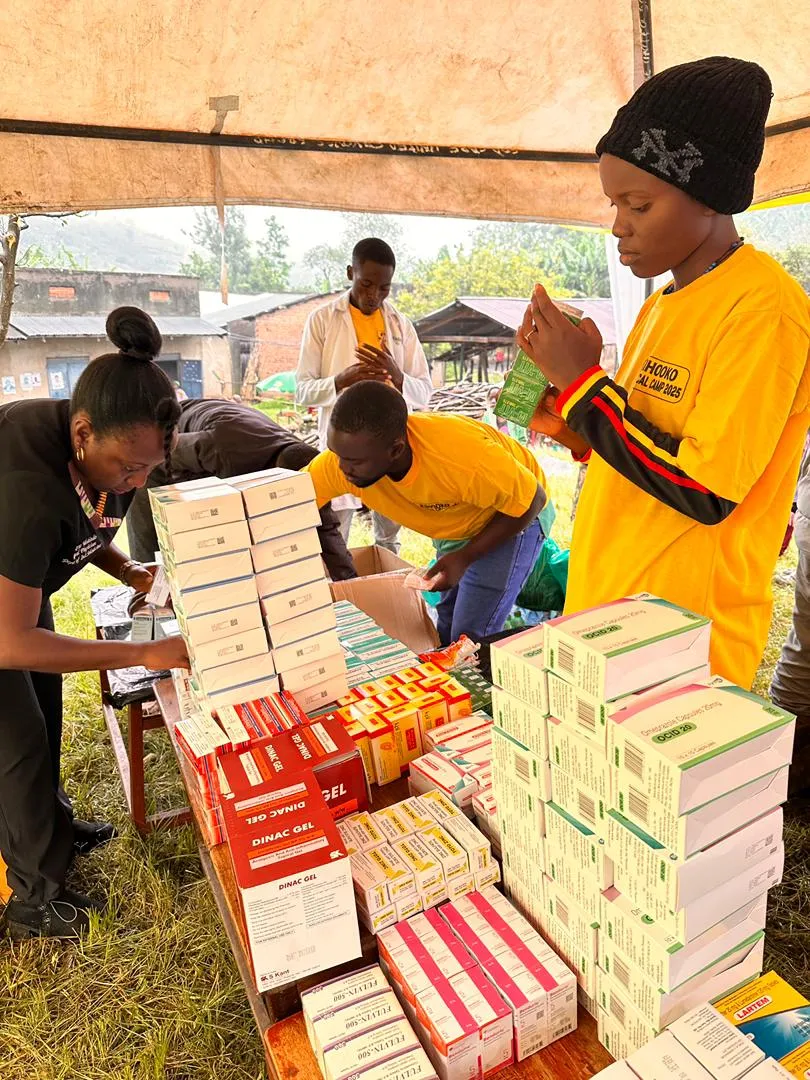
The camp used defined service stations: registration; blood pressure, random blood sugar, weight and height measurements; clinical assessment; diagnosis and prescriptions; and dispensing.
Clients brought their own exercise books. Clinicians reviewed earlier treatment and recorded current care, while data clerks transferred details into four handwritten registers.
Medicines were issued with counselling on use, adherence and return precautions. The report describes a structured flow intended to reduce waiting and missed screening steps.
2025 report, methods and data sources.
Clients brought exercise books containing previous treatment notes. Current assessments were recorded there, and two data clerks entered information into four handwritten registers, including demographics, blood pressure, weight, diagnosis and treatment.
Two data entrants transferred the primary records into Microsoft Excel. The team reports checks for duplicate entries and documentation errors before analysis of a de-identified dataset containing 342 registrations. The underlying register has not been supplied with this publication.
Diagnoses were summarised across up to three fields for each person. Abbreviations and spelling variants were grouped. Missing or implausible entries were excluded from particular calculations where the source specifies this; totals therefore differ between variables.
2025 report, Data sources and analysis approach.
Age was validly recorded for 329 clients. Their median age was 52 years, with the middle half aged 40–66. There were 244 female clients, 97 male clients and one record without sex recorded.
The report recorded 443 diagnoses across clients; 99 people had two or more diagnoses documented. These are diagnosis entries, not additional people.
2025 report, service statistics and Table 1.
| Indicator | Value |
|---|---|
| All registrations | 342 |
| Female | 244 (71.3%) |
| Male | 97 (28.4%) |
| Sex not recorded | 1 |
| Valid age recorded | 329 (96.2%) |
| Age missing / invalid | 13 |
| Median age | 52 years |
| Middle half of ages | 40–66 years |
2025 report, Table 1 and key service statistics.
Missing values affect the questions that can be answered. Weight was not recorded for 180 clients, so the report does not provide a reliable nutritional or obesity profile.
| Record | Count |
|---|---|
| BP entry present | 318 |
| Complete BP pairs | 315 |
| BP absent | 24 |
| Single BP component only | 3 |
| Random blood sugar present | 306 |
| Weight missing | 180 |
| Age missing | 12 |
| Age outside valid range | 1 |
2025 report, completeness notes. The source used an age validity range of 0–110 years.
The report lists the following categories among 318 clients with a blood pressure entry. Only 315 entries had both systolic and diastolic values. The category table nevertheless totals 318, so it requires checking against the register before further analysis.
| Category as reported | n | % |
|---|---|---|
| Stage 2 hypertension | 137 | 43.1 |
| Stage 1 hypertension | 63 | 19.8 |
| Hypertensive crisis | 48 | 15.1 |
| Elevated | 30 | 9.4 |
| Normal | 40 | 12.6 |
2025 report, Table 2, reproduced as reported. The underlying register was not supplied; categories are not independently reclassified.
The source defines normal readings as below 120/80, elevated as systolic 120–129 with diastolic below 80, stage 1 as systolic 130–139 or diastolic 80–89, stage 2 as systolic ≥140 or diastolic ≥90, and crisis-range readings as systolic ≥180 or diastolic ≥120, in mmHg.
These historical labels are reproduced to explain the source analysis. The stage 2 and crisis definitions overlap unless an ordering rule is applied; the supplied report does not explain that rule in detail. The category counts also total 318 despite only 315 complete pairs. They therefore remain reported counts, not an independently validated reclassification.
The report describes clients who had gone without medication for weeks or months because of cost and limited stocks at hard-to-reach facilities. This qualitative observation supports its call for care continuity, but it is not accompanied by a count of medicine interruptions.
2025 report, Methods, BP results and data-quality notes. No individual clinical advice is given here.
Random blood sugar was recorded for 306 clients. The report groups the readings below and recommends confirmatory testing and follow-up for elevated or high results. A screening reading alone is not a diagnosis.
| Source category | n | % |
|---|---|---|
| Normal, below 7.8 mmol/L | 276 | 90.2 |
| Elevated, 7.8–11.0 mmol/L | 20 | 6.5 |
| High, 11.1 mmol/L or above | 10 | 3.3 |
2025 report, Table 3. Historical screening categories from the supplied report.
The report counted diagnoses across up to three fields per client. The most frequently documented groups are shown below; these entries reflect the mix of chronic and acute conditions seen at the camp.
| Recorded diagnosis | Entries | % of 443 |
|---|---|---|
| Hypertension | 96 | 21.7 |
| Peptic ulcer disease | 46 | 10.4 |
| Gastritis | 27 | 6.1 |
| Neuropathy | 25 | 5.6 |
| Arthritis | 21 | 4.7 |
| Urinary tract infection | 21 | 4.7 |
| Pelvic inflammatory disease | 15 | 3.4 |
| Bronchitis | 9 | 2.0 |
2025 report, Table 4. Entries can overlap within one client.
These additional entries complete the list of leading diagnoses in the report. The table is not an exhaustive list of all 443 diagnosis entries.
| Recorded diagnosis | Entries | % of 443 |
|---|---|---|
| Cystitis | 7 | 1.6 |
| Osteoarthritis | 6 | 1.4 |
| Diabetes mellitus | 6 | 1.4 |
| Gastroenteritis | 5 | 1.1 |
| Pharyngitis | 5 | 1.1 |
| Neuropathic pain | 5 | 1.1 |
2025 report, Table 4 continued. Neuropathy and neuropathic pain are separate rows in the source.
2025 event photographs and report.
The report notes 12 missing ages and one implausible age, excluded from age statistics. Blood pressure was missing for 24 clients, and three entries had only one component recorded.
Weight was missing for 180 clients, limiting nutritional and obesity analysis. Some diagnosis abbreviations and spelling variants were grouped during reporting.
The figures describe attendees and their recorded care on one day. They do not measure the prevalence of disease across the surrounding population or prove lasting outcomes after the camp.
2025 report, data quality notes. Interpretation distinguishes attendance and screening from population estimates.
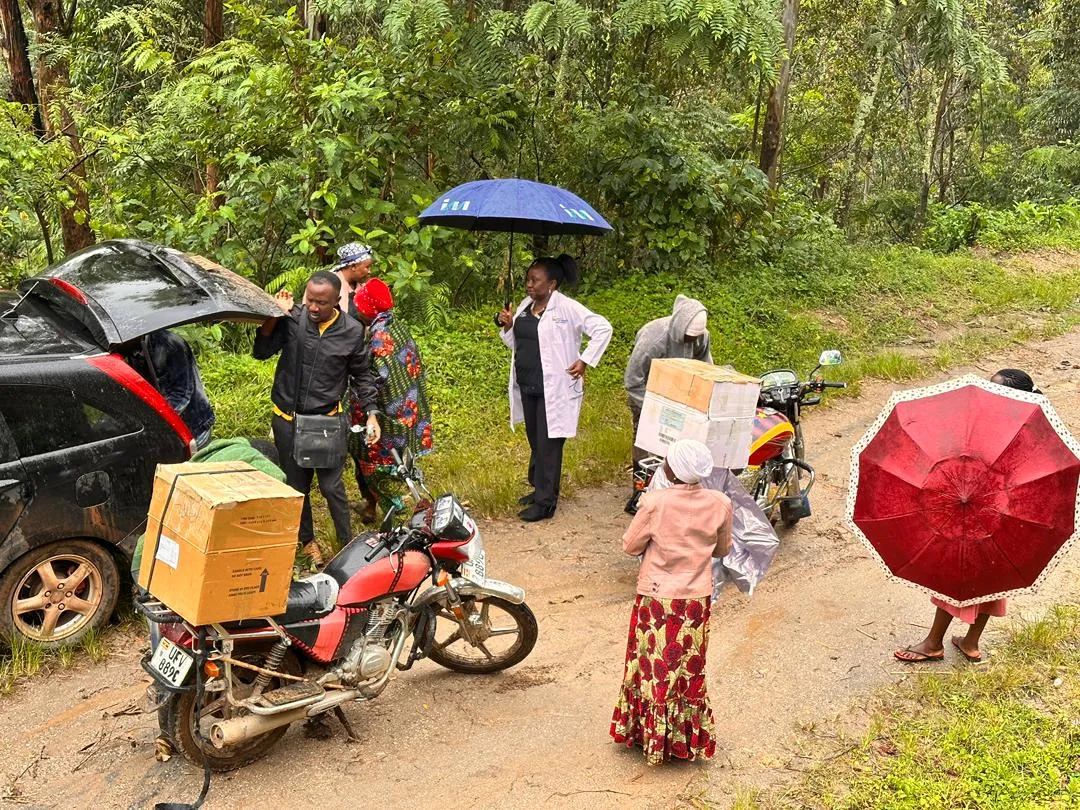
Rain and difficult roads affected travel. Vehicles became stuck and suffered tyre damage, adding risk to start times and transport costs.
The report recommends early route assessment, suitable vehicles, contingency equipment and earlier departure. It also calls for clearer station signage, priority triage and an end-of-day review of documentation.
Community mobilisation and the station-based approach worked well enough to retain in future camps, with stronger preparation and consistent data capture.
2025 report, challenges, lessons and operational recommendations.
The team called for stronger links with nearby facilities, including Bwera Hospital and Kasanga PHC III, using referral notes and follow-up arrangements for clients needing continuing care.
The report recommends counselling, support for medicine adherence, confirmatory testing where indicated and clear urgent-referral protocols. These are recommendations from the report, not a claim that every follow-up had already taken place.
The wider lesson is continuity: reaching a community for a day is valuable, and its lasting benefit depends on the care people can access afterwards.
2025 report, clinical and public-health recommendations.
The report recommends referral notes, follow-up lists and coordination with Bwera Hospital and Kasanga PHC III for clients needing ongoing blood pressure care. A recorded referral should be distinguished from a confirmed visit and an achieved health outcome.
Its counselling priorities include medicine adherence, salt reduction, physical activity and reducing alcohol and tobacco use. For elevated or high random blood sugar, it recommends confirmatory testing, including fasting blood sugar or HbA1c where available, and linkage to chronic-care clinics.
The team also calls for clear urgent-management and referral protocols for severely elevated blood pressure and symptomatic hyperglycaemia in future camps. These are the report’s recommendations to clinical organisers; implementation and clinical decisions belong with qualified practitioners.
2025 report, Clinical and public health recommendations.
Before another camp, the report calls for a site assessment covering road access, parking, tent placement, power, water and movement between stations. Appropriate transport should be budgeted for, including four-wheel-drive vehicles where needed.
Spare tyres, a jack, tow rope and traction aids are recommended alongside alternative routes and earlier departure. The difficulties recorded on the journey make transport preparedness part of service delivery, not a peripheral issue.
The team recommends priority triage for pregnant women, older people and clients with severe symptoms or markedly abnormal readings. Standardised registers, a designated data focal person and an end-of-day review should improve completeness and legibility. These remain proposals for future delivery, not a claim that a new programme has already been adopted.
2025 report, Operational and logistics recommendations.

2025 event photo folder; matching report photograph.
Reviewed 2025 event album.
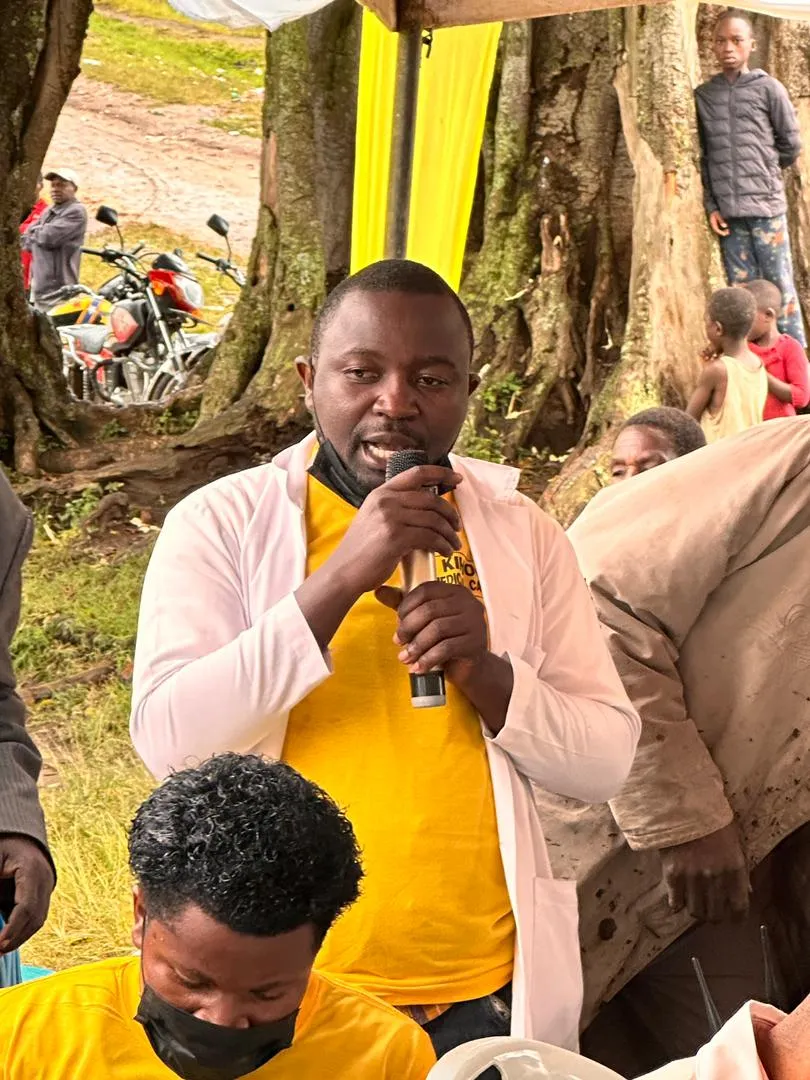
Reviewed 2025 event album.
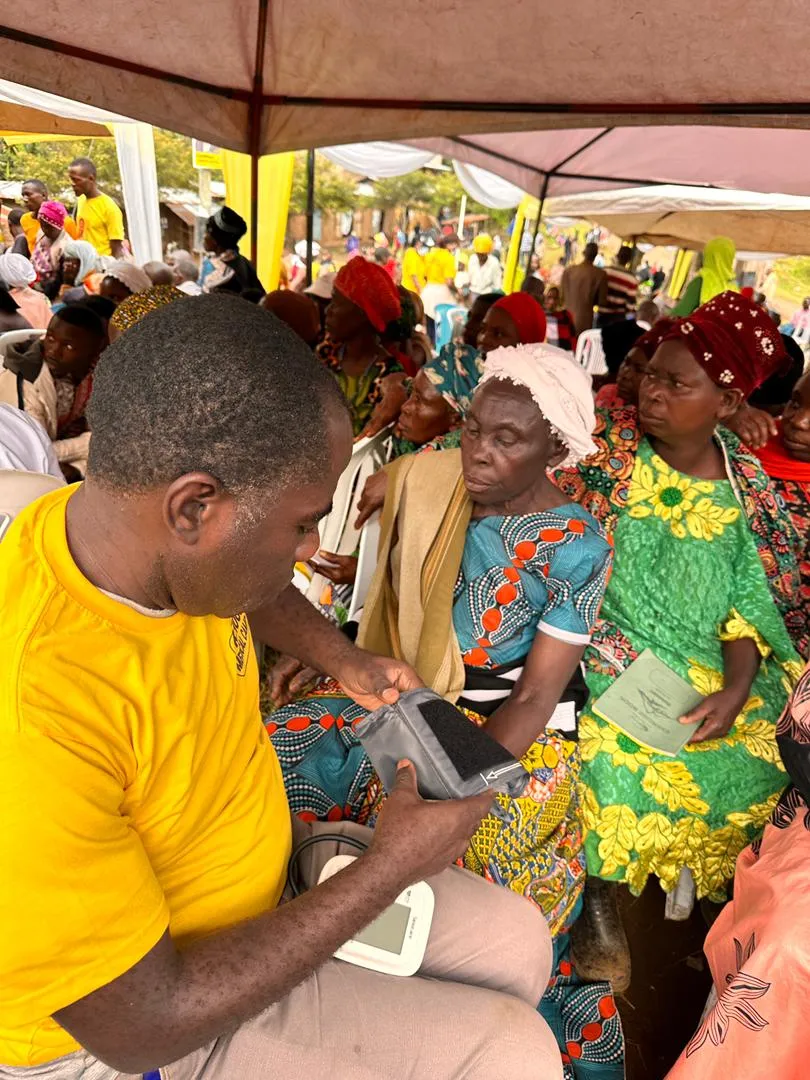
Reviewed 2025 event album.
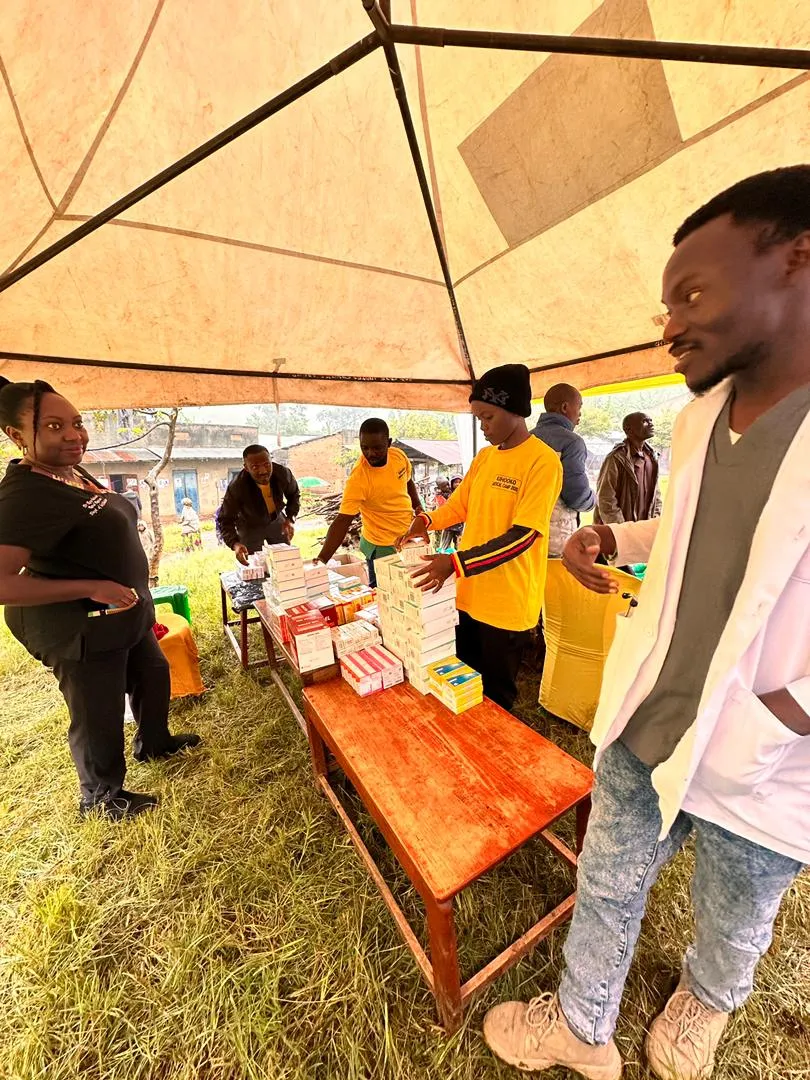
Reviewed 2025 event album.
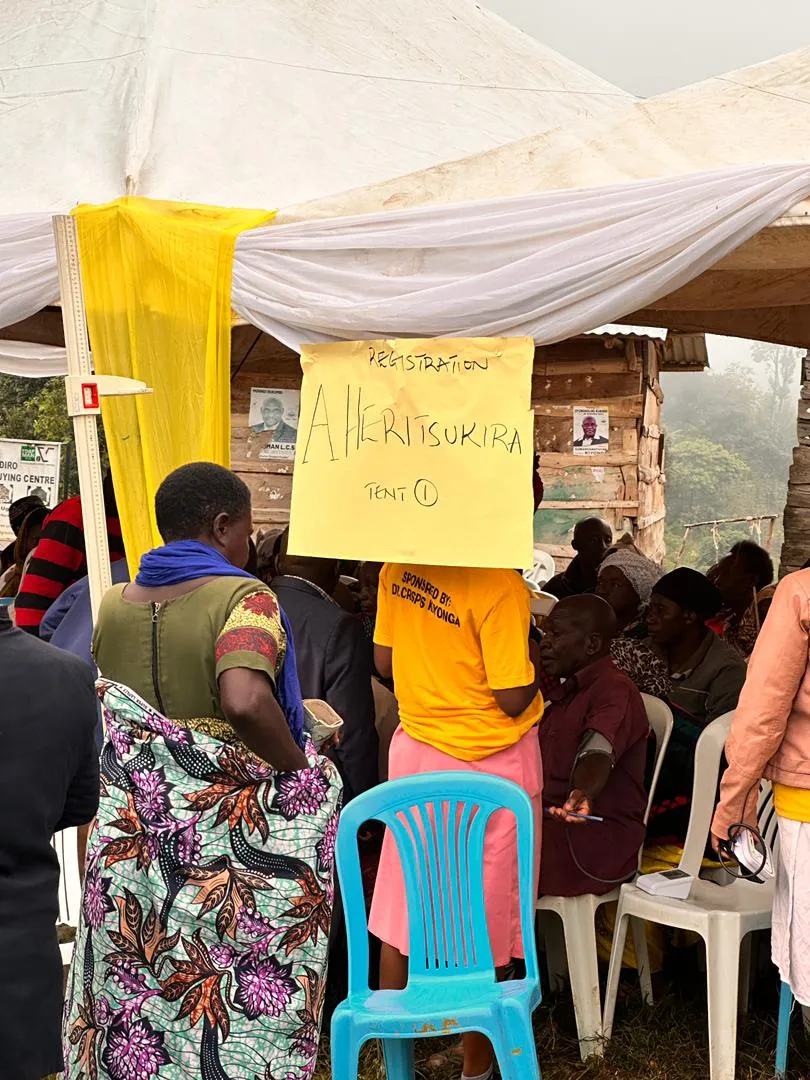
Reviewed 2025 event album.
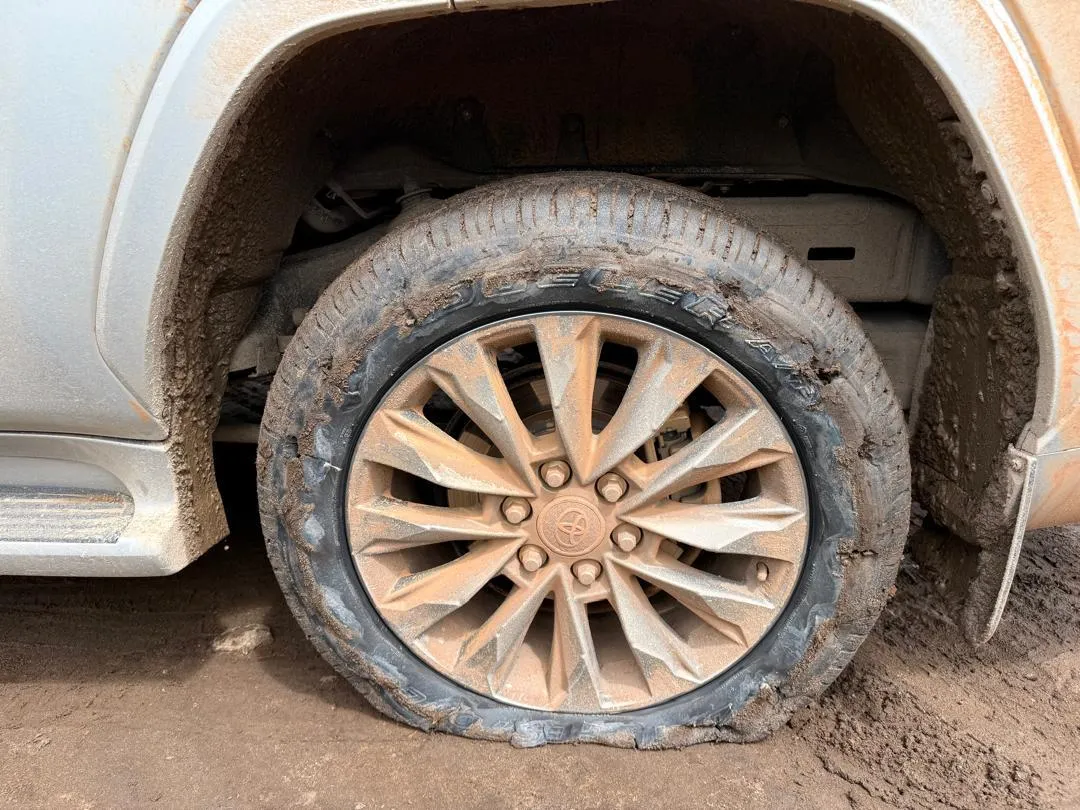
Reviewed 2025 event album.
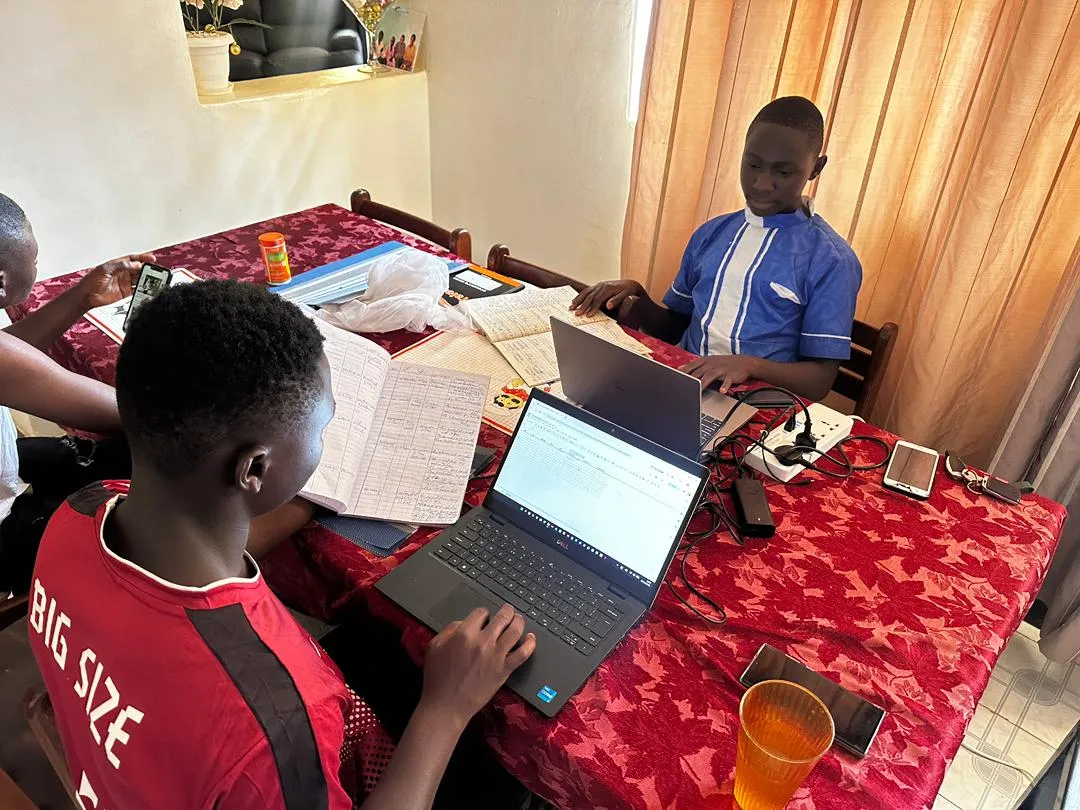
Reviewed 2025 event album.
The report credits Paul Mulemberi Kiyonga, Dorothy Kabagambe Ssemanda, Diana Mbambu Kabagambe, Dr. Rose Muhindo Kabagambe, Dr. Patrick Mbusa Kabagambe, Eng. Philip Mugisa Kabagambe, Denis Lukaaya, Charles Kiyonga, Alice Kiyonga and Hon. Dr. Crispus Kiyonga.
This illustrated reading edition draws on Kiyonga Medical Camp Report, version 2 and the supplied event photographs. Content has been reorganised for reading, with source statistics and data limitations identified.
This is the 2025 Kiyonga Medical Camp. Its photographs and figures are kept separate from the 2022 Paddy Kabagambe Memorial Medical Camp.
Family-supplied 2025 report, credits, tables and photographs. Digital edition, September 2026.
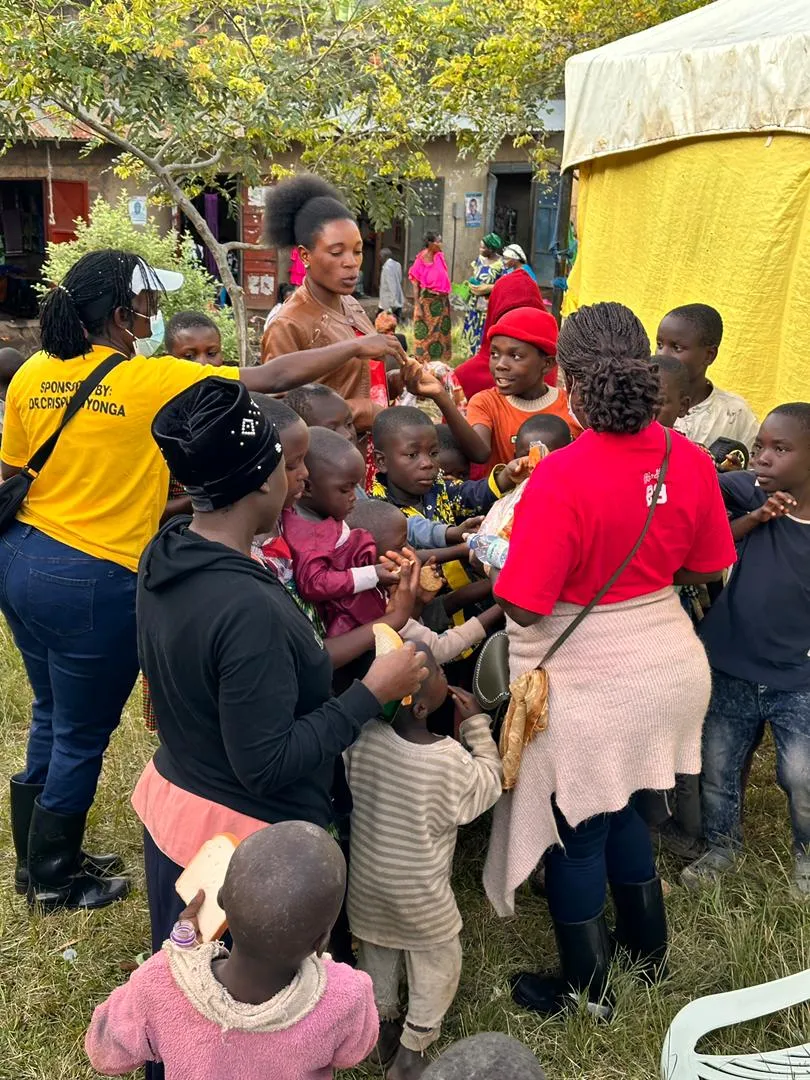
Buhatiro’s camp brought care to 342 registered clients in a setting where distance and terrain make ordinary access difficult. The report records both the clinical work and the determination required to transport the team and supplies.
Its findings point to the need for sustained links with routine services. The strongest conclusion is practical: combine outreach with dependable referral, medicine access, health education and usable records. Attendance alone cannot establish how many people later received continuing care.
This edition preserves the full scope of the supplied report: preparation, methods, results, data limitations, challenges, lessons, recommendations, acknowledgements and photographs. No additional clinical outcomes or expenditure totals have been invented.
Kiyonga Medical Camp Team, report dated 13 December 2025, version 2.
Use arrows, your keyboard or swipe to turn the page.
An illustrated reading edition of the supplied camp report. Source notes identify the record and its limitations.
You’re offline. Reading the saved edition.