THE INDUSTRIALISTPKMF
The Industrialist
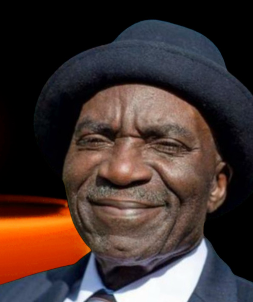
 Paddy Kabagambe
THE LIFE OF PADDY KWIRA KABAGAMBE
Illustrated family edition · September 2026 · Life, family and community service
Use the Chapter menu or enter a page number to move directly to a section. The complete edition can also be read continuously or printed.
| Section | Page |
|---|---|
| About this edition | 4 |
| Dedication | 5 |
| 01 · Beginnings in Isango | 6 |
| 02 · Education opens doors | 8 |
| 03 · The industrialist | 13 |
| 04 · Giving back to Kasese | 23 |
| 05 · The father at home | 27 |
| 06 · A wide circle of friendship | 33 |
| 07 · Illness and resilience | 35 |
| 08 · The legacy continues | 41 |
| Section | Page |
|---|---|
| Epilogue | 46 |
| Sources & acknowledgements | 47 |
| Chronology | 48 |
| Editorial record | 50 |
This book tells the life of Paddy Kwira Kabagambe through two complementary records: the family’s manuscript, Daddy’s Biography, and his own curriculum vitae, signed in Kampala in March 1998. Letters, certificates, family photographs and the foundation’s records accompany the narrative.
His CV follows the scientist and manager through factories, consultancy and public institutions. The family account remembers the man behind those appointments: his school journeys, music, friendships, generosity and determination after illness. Recollections are presented as recollections, and historical employment figures as figures recorded in his own papers.
This edition brings the documented story to a conclusion, including the community work continued after his death. The surviving manuscript has unwritten headings for several later-life events. Their absence is recorded in the closing editorial notes; no imagined dialogue, medical explanation or final-days narrative fills those gaps.
Family manuscript; Paddy Kabagambe’s CV, March 1998; accompanying archival documents.
To the family, friends, colleagues and communities who shared Paddy’s life, and to the people who continue the work he cared about.
This is a remembrance of a father and an industrialist whose opportunities became opportunities for others. His legacy belongs in classrooms and health centres as much as in the record of his working life.
Paddy Kwira Kabagambe was born on 25 September 1946 in Isango, in what is now Kasese District. The family manuscript describes a modest home, with parents whose livelihood came from farming. His childhood was shared with his siblings Milton, Alice, Enid and Jackson.
The writer remembers hearing that Paddy was a bright and hardworking pupil. Like many parents, he would later tell his children about the effort it took to attend school and do well there. To the child writing his biography, those stories rang true: they fitted the discipline and determination visible in the father they knew.
Isango remained more than a birthplace. Years later, when his work took him into industrial management, it was a community to which he returned with practical support. Education and healthcare would become enduring expressions of that connection.
Daddy’s Biography, PDF pages 1 and 8–9; PKMF brochure, page 2.
The manuscript names his parents as Mr. and Mrs. Kabatooro and recalls a childhood rooted in farming. It does not provide a detailed diary of those early years. What it does preserve is the importance the adult Paddy attached to effort, learning and the responsibilities of family.
His children heard his stories about school long before they read his qualifications. In their account, his insistence on hard work was credible because they watched him practise it. The father who expected a child to read was also the father who bought the books and made the journey to school.
The link with Isango endured through work in Jinja, Mbale and Hima and through later years abroad. The health facility he established there gave practical form to that continuing attachment.
Family manuscript, Humble Beginnings and community-service sections; March 1998 CV.
Paddy attended Nyakasura Secondary School in Fort Portal from 1962 to 1965. From 1966 to 1967 he studied science and mathematics at Uganda Technical College, Kyambogo. His Higher School Certificate records the November–December 1967 examination.
Between 1968 and 1971 he studied Chemistry and Geology at the University of Nairobi. His degree certificate marks his admission to the Bachelor of Science degree on 26 October 1971.
The move from Isango to classrooms in Fort Portal, Kyambogo and Nairobi opened a path into industry. Chemistry would become a practical tool for understanding dyes, fabrics and the demands of factory production.
For his children, education was also a daily priority: books, school journeys and a father who expected them to make the most of their opportunities.
CV, March 1998, education section (PDF page 4); Higher School Certificate (page 8); University of Nairobi certificate (pages 3 and 10).
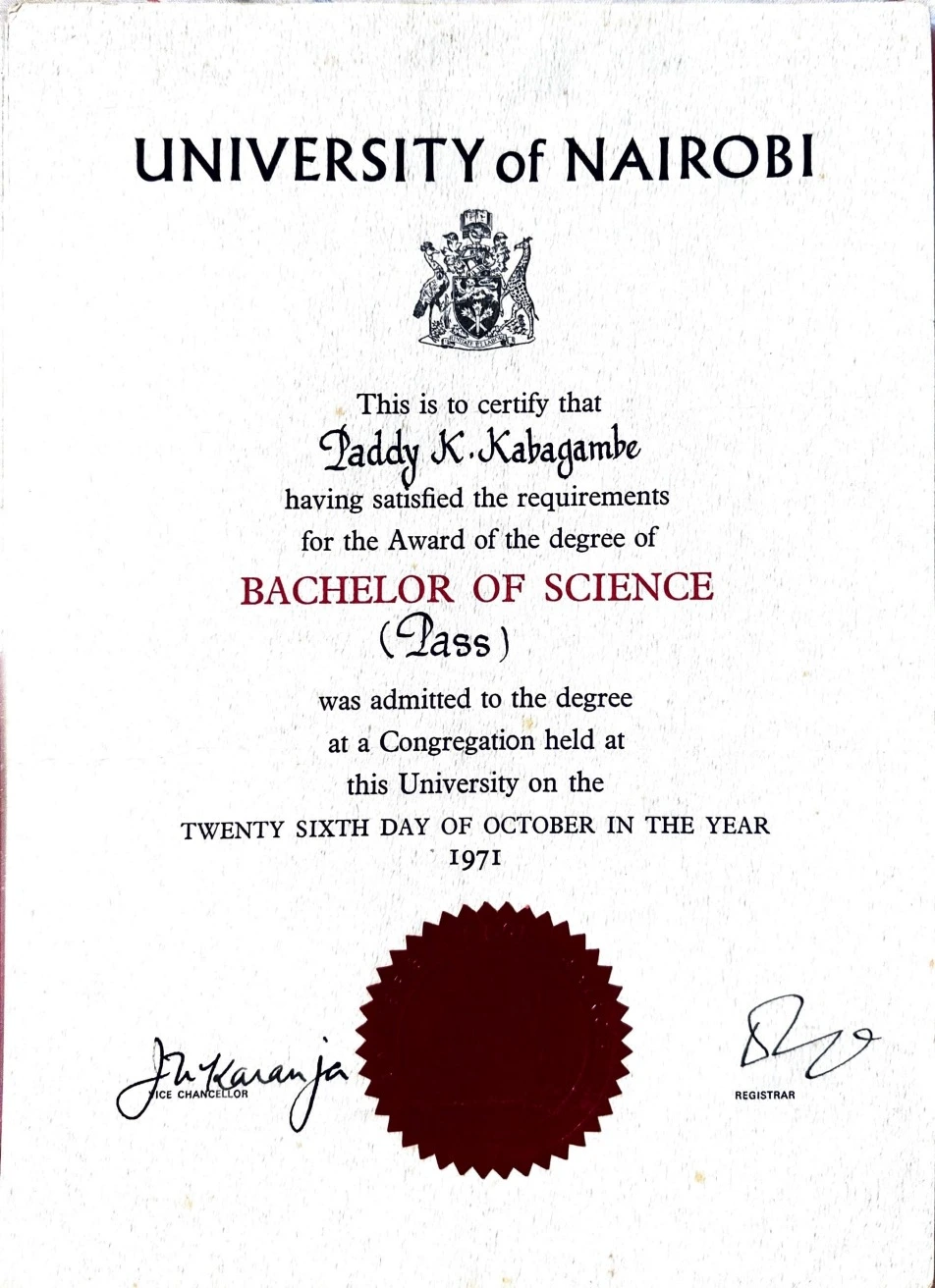
The certificate records the award of a Bachelor of Science degree. His CV identifies his subjects as Chemistry and Geology.
CV archive, PDF page 10. Open the document to examine the original.
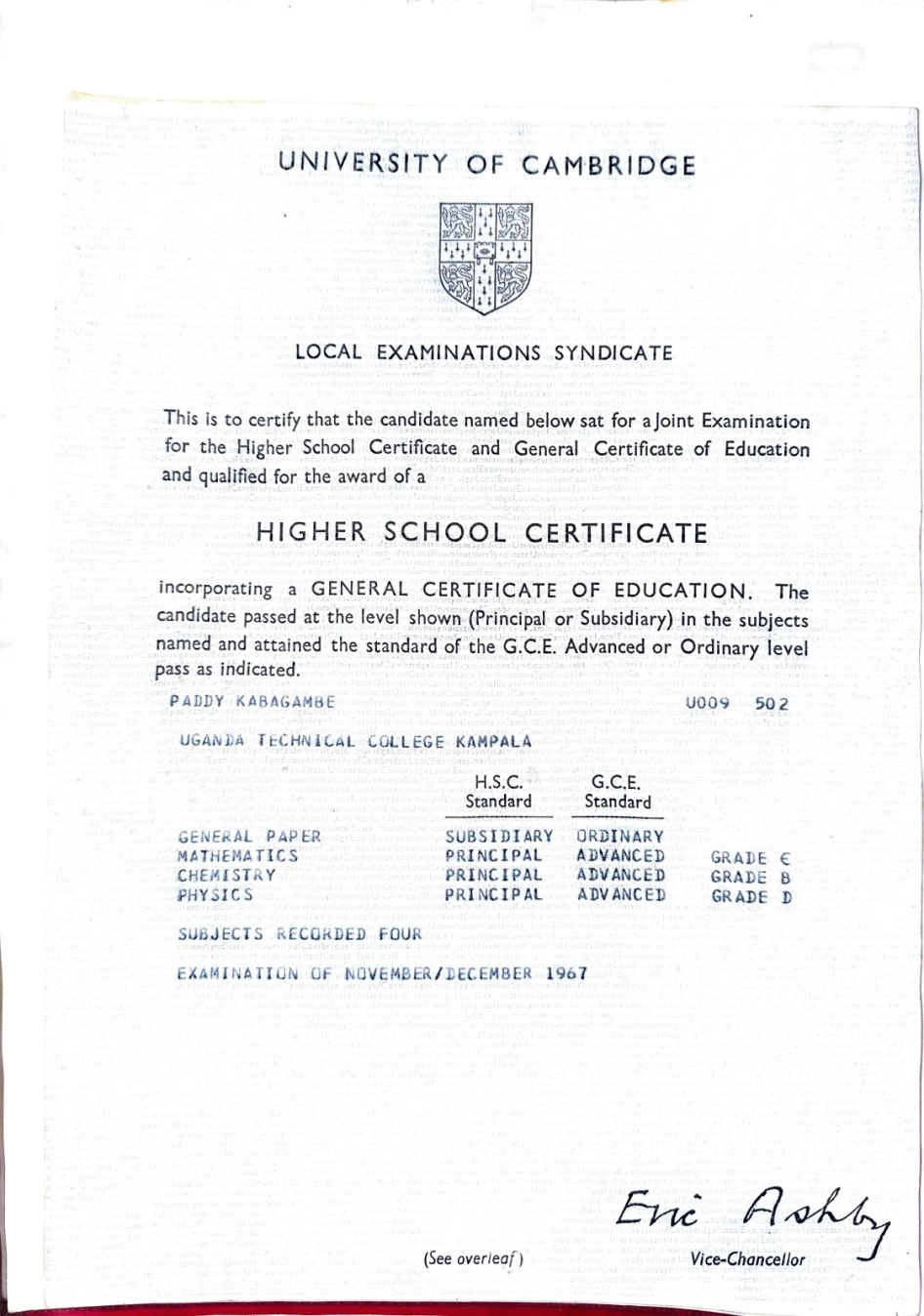
The certificate records mathematics, chemistry and physics at principal level, and general paper at subsidiary level.
CV archive, PDF page 8.
In the family account, these were the words Paddy repeated when dropping a child at school. He reviewed shopping lists with the care of someone marking an examination paper: crossing out one item, adding another, then making sure the essentials were provided.
The writer recalls shopping at Biashara supermarket in Jinja for school supplies, with the bill sent to their father. There were textbooks, boarding-school requirements and journeys to deliver children to their different schools.
One child secretly hoped the family would arrive too late at Kisubi and have to return home for another night of the holiday. That hope was never fulfilled. Paddy would get them there in time.
These ordinary routines carried his expectations. He wanted his children to be comfortable enough to concentrate, but he expected concentration in return. In the manuscript, their later professional lives are understood as a fruit of that sustained investment.
Daddy’s Biography, PDF pages 2–4. Edited from the author’s first-person recollections.
The family remembers education as a commitment that reached every term and every holiday. Paddy arranged school supplies, delivered children to boarding school and visited them. At home he provided textbooks and encouraged revision, even when the children would have preferred the television.
Schools named in the manuscript include St. Savio Junior School and St. Mary’s College Kisubi, St. Leo’s Kyegobe, Jinja College, Busoga College Mwiri, Gayaza High School, Trinity College Nabbingo, Mount St. Mary’s Namagunga and Migadde College. The account also recalls support for higher education in India.
The resulting careers crossed medicine, pharmacy, nursing, engineering, law, administration, information technology, auditing and business. This book remembers that breadth without treating the manuscript’s old employer details as a current directory. The achievement that mattered in the family account was the foundation he helped each child build.
Family manuscript, Education is key and A spectrum of professionals.
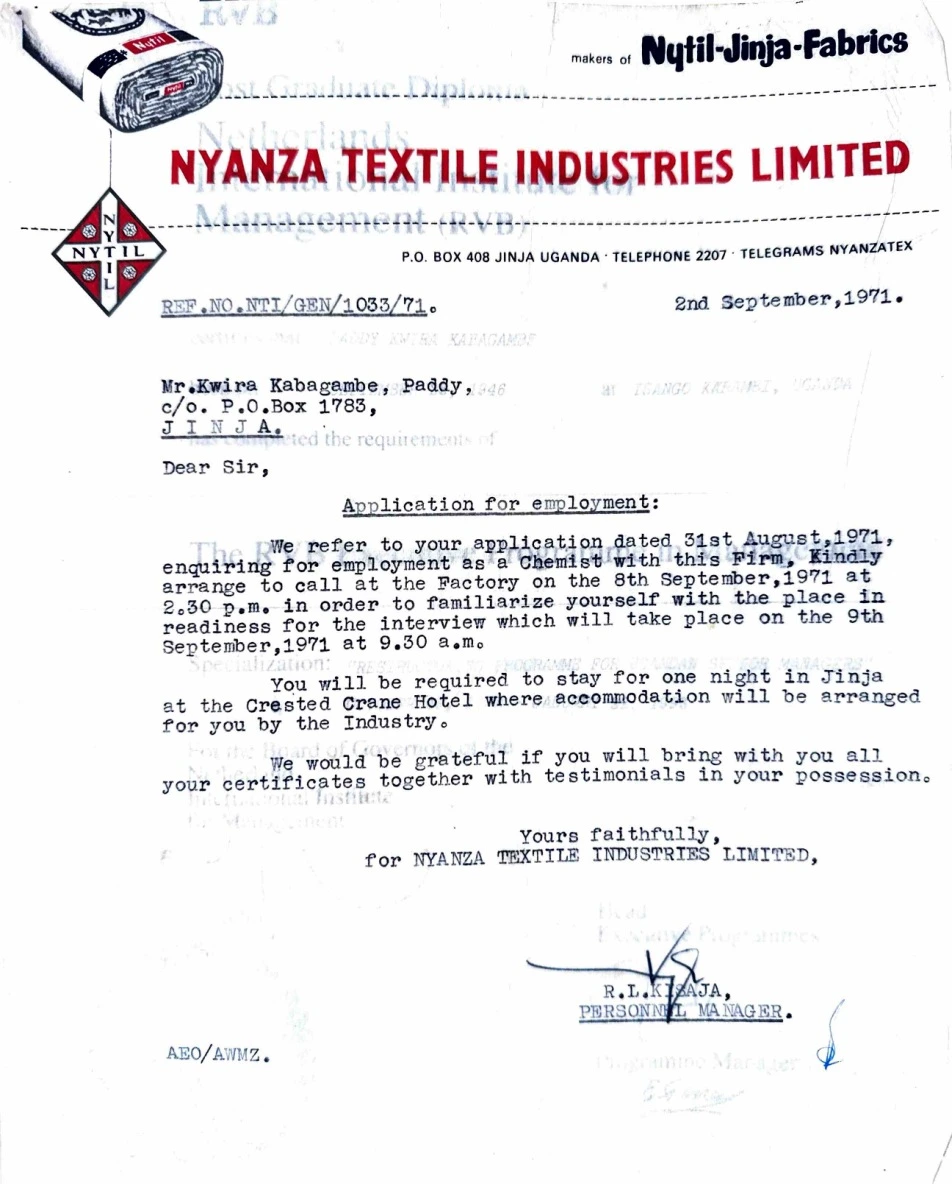
CV archive, PDF page 1. Interview invitation, not an appointment letter.
The letter is addressed to “Mr. Kwira Kabagambe, Paddy”. Dated 2 September 1971, it responds to his application of 31 August for employment as a chemist at Nyanza Textile Industries Limited.
Nytil asked him to visit the factory on 8 September at 2.30 p.m. to familiarise himself with the workplace. His interview was scheduled for the following morning at 9.30.
The company would arrange one night’s accommodation at the Crested Crane Hotel in Jinja. He was asked to bring all his certificates and testimonials. The instructions are ordinary and precise; preserved decades later, they give a vivid beginning to the working life.
The letter records an invitation. The next step is established by his CV: on 1 October 1971 he joined Nytil as a technologist in training.
Nytil letter, 2 September 1971 (CV archive page 1); CV working experience (page 5).
On 1 October 1971, Paddy joined Nyanza Textile Industries Limited in Jinja as an in-plant technologist in training. His CV fixes the date at which a science graduate began the industrial career that gives this book its title.
By 1975 he was Works Manager in charge of the finishing department. He recorded responsibility for 650 operatives, including engineers, chemists and other skilled employees. That year he also became a Licentiate Member of the Textile Institute.
His training took him to European dye and chemical manufacturers. The CV lists Bayer and Hoechst in Germany in 1974; Sandoz and Ciba Geigy in Switzerland in 1975; and Imperial Chemical Industries in Manchester in 1975.
Textile coloration, printing, colour storage and plant management formed part of that training. He was learning both how a material behaved and how to organise the people and processes that turned it into a finished product.
CV, March 1998, training and working experience (PDF page 5).
From 1978 to 1981 Paddy served as General Manager of African Textile Mill in Mbale under the National Textile Board. His CV describes a rehabilitation project supported by an eleven-million-dollar Abu Dhabi Fund investment, with equipment ordered before a change in ownership arrangements.
He then moved to Uganda Cement Corporation as General Manager of Hima Cement Factory from 1982 to 1985. One production line had been damaged by fire in 1980; the second had remained uncommissioned.
The CV describes the work to revive the second line in late 1982 and early 1983. It records the recruitment of more than 800 workers and over 50 management staff for the rehabilitation effort.
Production grew alongside attention to spare parts, stores and essential materials. Paddy also recorded expansion of the residential estate and improvements in employee welfare: the people around the factory mattered alongside the machinery.
CV, March 1998, working experience (PDF pages 5–6). Figures and project account are Paddy’s own retrospective record.
In early 1986 Paddy left public service and established Standard Technical Services with three colleagues. The consultancy provided computer training and project formulation. His CV names work involving the Bank of Uganda and the computerisation of Nytil operations.
In 1991 the Ministry of Industries and Technology called him back to provide relief management at Print Pack in Jinja. He served as General Manager for eleven months, with the task of helping a company facing management difficulties.
In 1992 he returned to Nytil as Managing Director. His CV describes preparing the factory for privatisation, reorganising operations and managing the transition from public enterprise to private ownership.
Writing in March 1998, he described an enterprise with more than 2,000 employees and 170 management staff during that assignment. His record emphasises the difficult work of relating production to the resources available.
CV, March 1998, working experience (PDF page 6). “1992 to date” refers to the CV’s March 1998 date, not a later verified end date.
Standard Technical Services represented a different way of applying Paddy’s experience. Established with three colleagues in early 1986, it offered computer training and project formulation at a time when the family manuscript remembers computing as a new presence in many workplaces.
His records describe a strategic business plan for the Bank of Uganda, undertaken with an American firm, and work on computerising operations at Nytil. These assignments brought together organisational knowledge, training and the practical adoption of technology.
The move into consultancy also helps explain the continuity in his career. Whether managing a production department, restoring a factory or advising an institution, his work involved putting people, information and resources together so that an organisation could function.
March 1998 CV, page 6; family manuscript, Private Consultancy.
The return to Nytil in 1992 placed Paddy in a demanding transition. According to his CV, he was asked to prepare the factory for privatisation by reorganising it and relating production to available resources. The task included decisions about staffing in an enterprise of more than 2,000 employees and 170 management staff.
The family manuscript records the subsequent purchase by Picfare Industries through an asset sale. This is the account preserved in his professional and family papers; it is not an independent financial audit of that transaction.
His working life cannot be reduced to job titles alone. The assignments repeatedly placed him at institutions facing change: rehabilitation, relief management and the passage from public enterprise to private ownership. His own record returns to practical questions of production, materials, people and continuity.
March 1998 CV, page 6; family manuscript, Nytil return and privatisation.
Alongside industrial responsibility, Paddy continued to study. The RVB diploma records completion of the Executive Programme in Management at the Netherlands International Institute for Management.
Its specialisation was the “Restructuring Programme for Ugandan Senior Managers”, running from 19 October 1992 to 22 January 1993. The timing places this study alongside his return to lead Nytil.
By March 1998 his CV also listed final-year MBA studies at the Cyprus Institute of Marketing. The supplied papers do not include an MBA award, so the record here is of continuing study.
Learning was a habit that carried from science into textile technology and then into the management of institutions undergoing change.
RVB diploma (CV archive pages 2 and 9); CV qualifications and current studies (page 4).
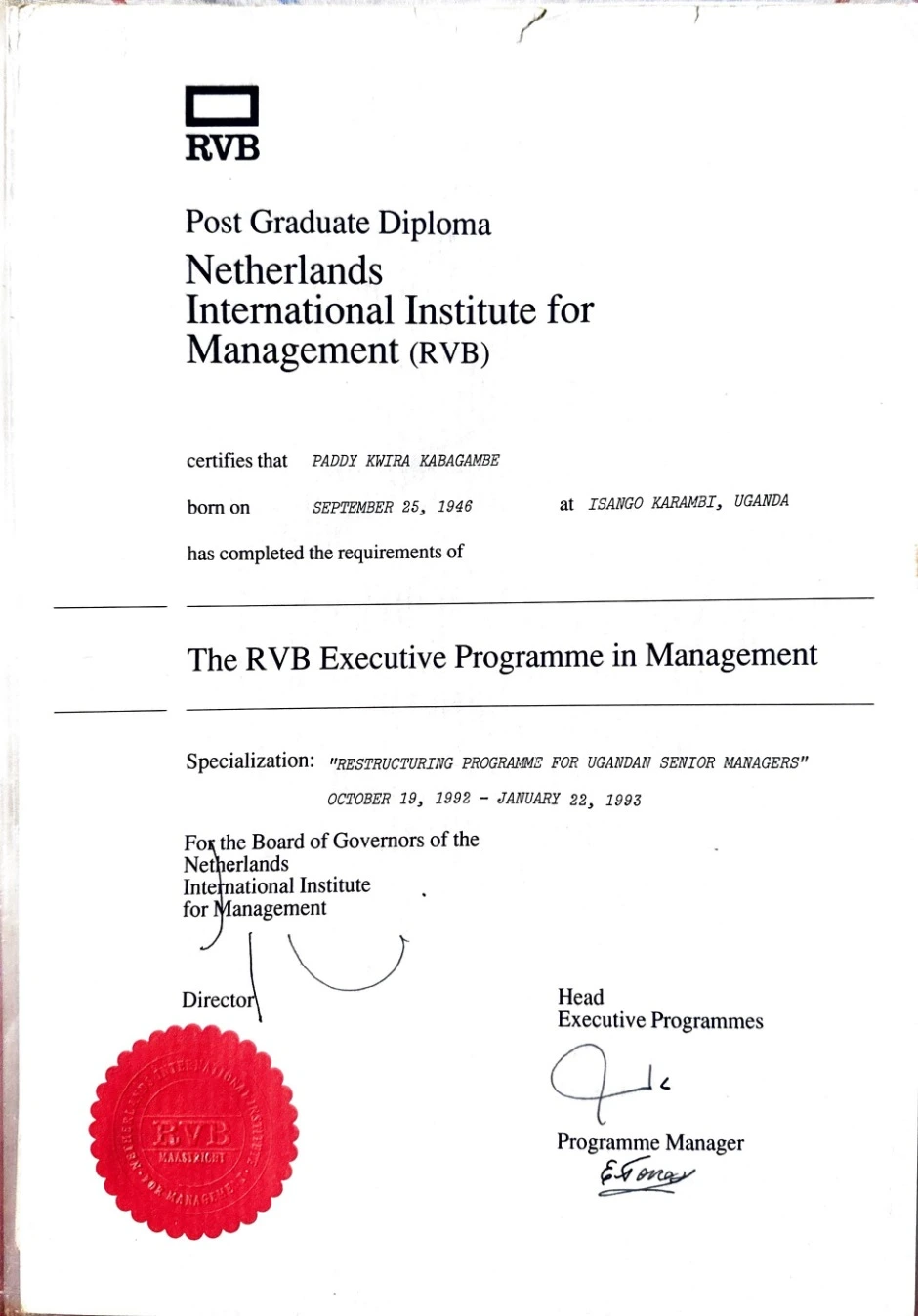
CV archive, PDF page 9.
Paddy’s responsibilities extended beyond the factories he managed. His March 1998 CV records three terms on the board of Uganda Development Bank, which provided long-term development financing.
He also served on the board of the Cotton Development Organisation, representing cotton lint converters. It was a role connected to the wider chain of agriculture, quality and industry on which textile production depended.
A further directorship was with Apollo Hotel Corporation / Sheraton Kampala. These appointments placed him within institutions concerned with finance, manufacturing and hospitality.
His CV also records enthusiasm for darts and table tennis, and promotion of boxing and soccer in enterprises where he had been chief executive. Work, recreation and community life met in the institutions he served.
CV, March 1998, additional responsibilities and hobbies (PDF page 7).
Paddy used the resources and opportunities of his working life to support others. The foundation brochure remembers his commitment to young people who were capable of succeeding at school but whose families could not meet the costs.
The Kwiratwiwe Scholarship Fund was one expression of that commitment. In his March 1998 CV, Paddy dated its beginnings to the 1980s and described more than ten years of support for the best P.7 girl and boy candidates in Kasese to continue through secondary school.
Karambi Secondary School was another. The family records identify Paddy among its founders, while the later memorial plaque honours his contribution to the school’s development.
His support for education extended beyond his own children. The manuscript remembers nephews, nieces and other young people whose schooling benefited from his help. The wider meaning of his work could be seen in the opportunities that reached those around him.
CV, March 1998, community welfare (PDF page 7); family biography pages 8–9; PKMF brochure; Karambi recognition plaque.
The Kwiratwiwe Scholarship Fund extended the priority Paddy gave his own children to young people across Kasese. His CV records its beginning in the 1980s and more than a decade of support for the best girl and boy completing Primary Seven.
The family manuscript describes support through Senior One to Senior Four. It names Kiiza Smith, Eunia Kabonesa and Stephen Kato among beneficiaries. These names belong to the family’s account of the fund; the surviving collection does not contain a complete beneficiary register or audited scholarship expenditure.
The manuscript preserves Paddy’s hope that beneficiaries would continue the fund for another generation of capable students whose families could not afford their schooling. That hope gives the story its forward direction: education received could become education made possible for somebody else.
March 1998 CV, page 7; family manuscript, Kwiratwiwe Scholarship Fund.
In Isango, Paddy established a health facility to bring care closer to people living in the hills. The family account describes the difficulty of travelling for treatment when rain damaged roads and swollen streams made crossings difficult.
His CV also records his chairmanship of Kagando Hospital’s construction committee under South Rwenzori Diocese. The family manuscript and brochure remember further support for churches and the Anglican cathedral in Kasese.
These contributions joined the institutions closest to everyday community life: a school, a health centre and places of worship. They were practical ways to support the people and places he continued to hold at heart.
In November 2024, the handover of the Isango memorial health centre to South Rwenzori Diocese would give this part of his legacy a new chapter.
CV, March 1998, community welfare (PDF page 7); family manuscript; PKMF brochure; family-confirmed 2024 handover.
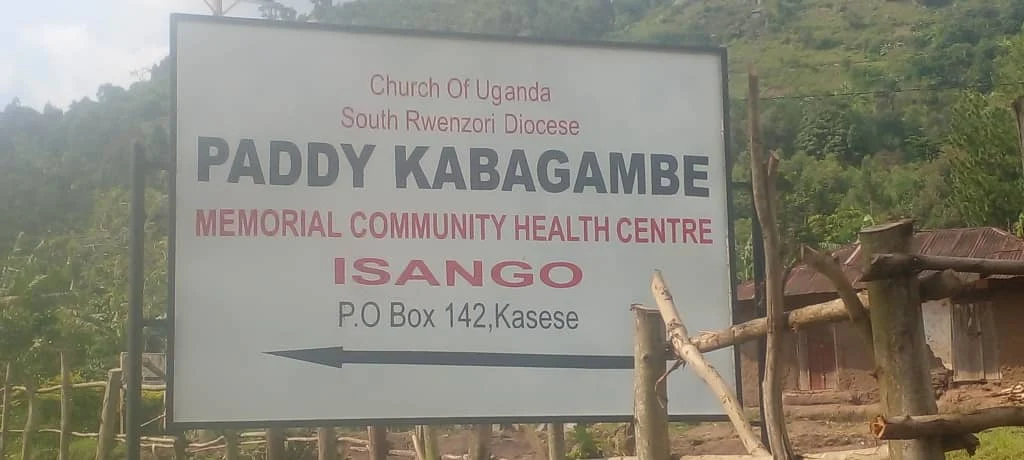
Family archive: 9e19bec4-ddfa-4548-b0a6-abc57247ce44.jpg.
The industrialist of formal appointments and management responsibilities was also a father with favourite records, a love of football and strong opinions about how a holiday should be spent.
The manuscript remembers the sound of his car at the gate and children hurrying away from the television to look busy. Some would crouch below the windows as they moved, hoping to escape notice before opening a textbook or beginning a household chore.
He supplied books and encouraged reading, even during the holidays. Yet the family’s memories also contain the pleasures he shared with them: music, films, outings and journeys together.
He could be exacting about schoolwork and generous about providing for it. These are the details that give the public figure a recognisable presence in the family home.
Daddy’s Biography, PDF pages 2–3 and 9–11. Adapted family recollections.
His music collection crossed styles and generations. The manuscript recalls recordings by Dolly Parton, Kenny Rogers, Whitney Houston, Diana Ross, Michael Jackson and many others, alongside local favourites such as Afrigo Band.
An Akai music system remained part of the household for more than twenty years, according to the family account, before he passed it on to a nephew. He enjoyed dancing, and music helped shape the atmosphere of home.
Football could draw an equally enthusiastic response. One family memory has him celebrating a goal with such force that a sofa gave way. Diego Maradona was among the players he admired.
At dinner, kalo and fish were familiar favourites. The writer recalls fish arriving so regularly that a meal of beans and rice prompted a question about whose birthday was being celebrated. It is a small, affectionate detail of daily life.
Daddy’s Biography, PDF pages 9–10. Adapted family recollections.
Paddy’s collection included records, tapes and videos. The family recalls action films, biblical stories, romances and music videos, as well as a music system that remained in use for more than twenty years before he gave it to a nephew.
Access to television sometimes required negotiation. When he put the television in his room to encourage study, the children would send the youngest among them to ask permission after homework and chores were finished. It is a memory of discipline softened by the ingenuity of a large household.
One outing took the family to Jinja’s Sailing Club for a promised Brenda Fassie performance. The manuscript remembers that the show did not happen and the money was not refunded. Even an unsuccessful outing found a place in the family story because Paddy had wanted to share it with them.
Family manuscript, music and family recreation.
Paddy enjoyed cars, particularly Mercedes-Benzes. The manuscript remembers him as a confident driver who could make a long journey seem ordinary, whether travelling between Kasese and Jinja or commuting towards Kampala.
The roads also connected the different parts of family life: work, school, visits and home. His children remember travelling with him and the effort he put into taking each of them to school.
The draft records his marriage to Mary Kunihira Kabagambe on 7 December 1996 at All Saints’ Cathedral in Nakasero, Kampala. It leaves the fuller wedding story for later writing.
Travel connected work, family and the places he called home. The manuscript also remembers flights between Kasese and Entebbe with Uganda Airlines during the children’s school years. The fuller railway and wedding stories were left unwritten; the journeys that are described nevertheless show how much effort went into keeping a large family connected.
Daddy’s Biography, PDF pages 10–13. Wedding date retained from the draft, pending family confirmation.
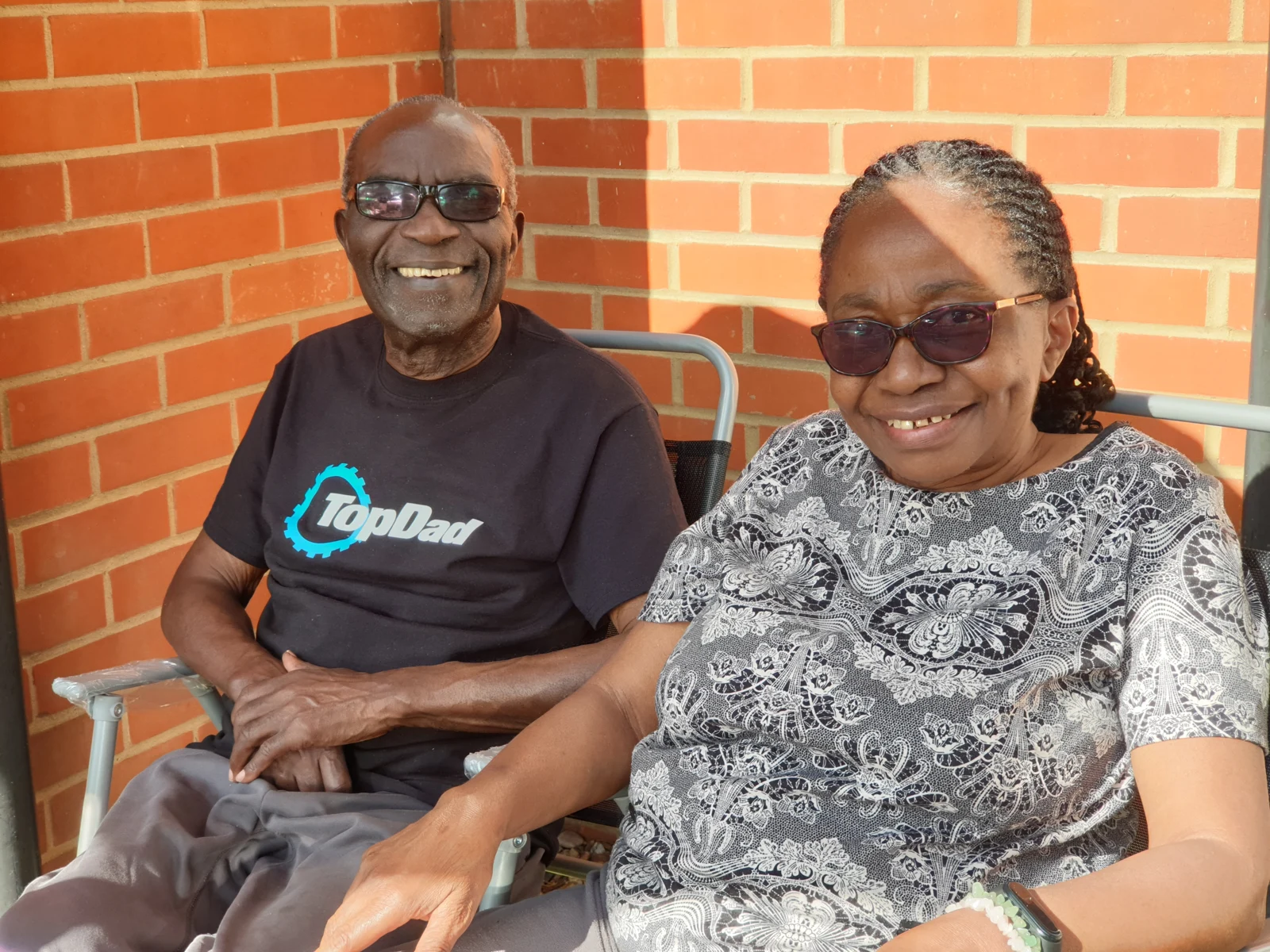
Family archive: IMG-20200509-WA0047.jpg.
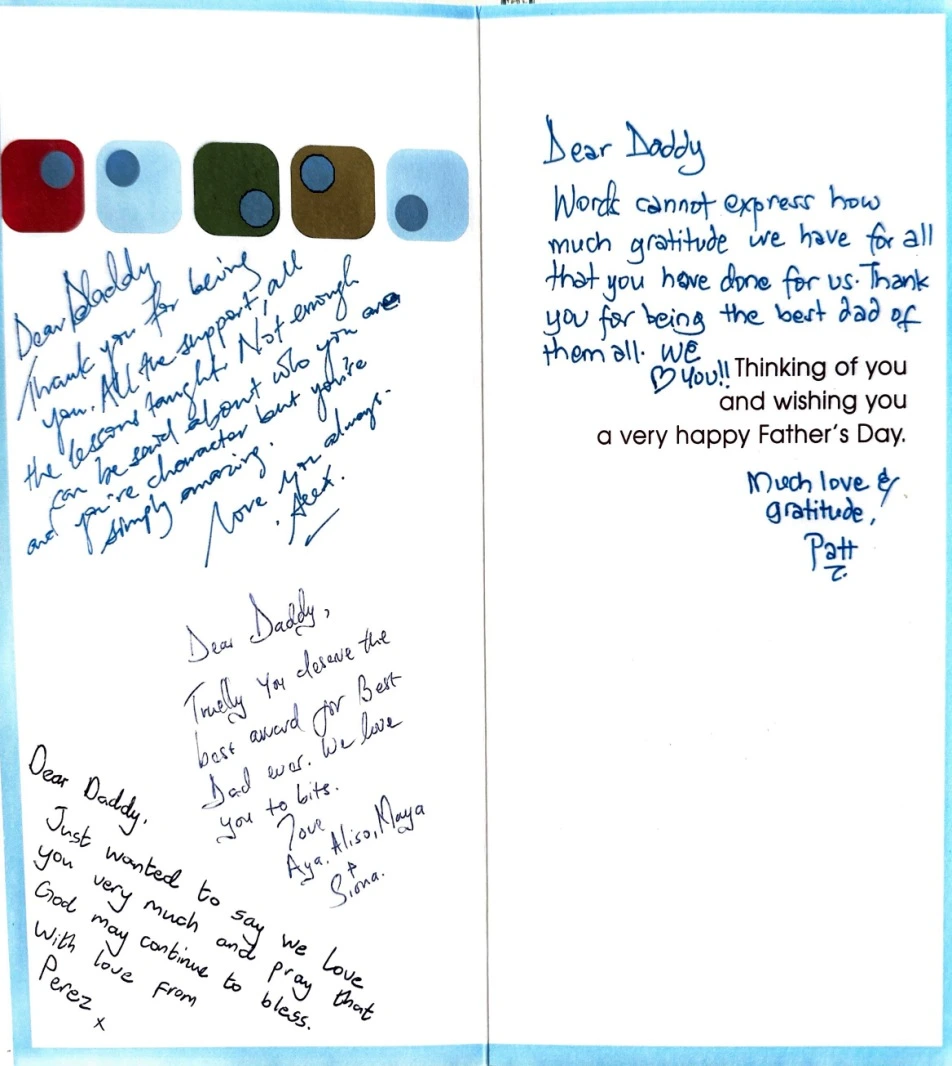
CV archive, PDF page 11. Signatures are preserved as written; family relationships are not inferred from the card.
The manuscript describes friendships that grew through work and neighbourhood life, then became relationships between whole families. In Mbale and Kilembe, children played together and neighbours were part of the ordinary rhythm of home.
The Babikingira and Kabagambe families are remembered as especially close. The draft recalls a period of more than five years when they lived together under one roof, sharing daily life as one household.
The Katuramu family also appears in memories of Kilembe and of journeys to school. The writer remembers being taken to St. Savio Junior School by John Katuramu in 1990.
The draft names many other friends without narrating their individual stories. Its detailed memories of neighbours in Mbale and Kilembe show a world in which friendship often became shared family life: children played together, adults helped with school journeys, and a household could make room for another family.
Daddy’s Biography, PDF pages 6–8. Sensitive third-party details and unsupported characterisations omitted from this adaptation.
The Babikingira and Kabagambe families first knew one another as neighbours in Mbale, where Paddy worked at African Textile Mill. Mr. Babikingira worked as his secretary. The manuscript remembers the relationship growing beyond those beginnings.
For more than five years, the two families lived under one roof. The importance of that memory is the hospitality itself: shared meals, children growing up together and the daily accommodation that turns friendship into a form of kinship.
Laeticia Babikingira is also remembered for helping connect the Kabagambes with the house they bought in Kirinya. The account places friendship in practical acts as well as affection. The assistance ran in more than one direction.
Family manuscript, Babikingira family. Private third-party financial and medical details are omitted.
The family manuscript dates Paddy’s first stroke to 22 December 1998, shortly after he came home for lunch at the Bukoto White Flats. Mary was expected back from England for Christmas the following day. A visit that should have been part of an ordinary afternoon became a moment that changed the family’s life.
A neighbour drove him to Nsambya Hospital. The draft describes difficulties with speech and movement, and the arrival of relatives and friends during his admission.
Mary was returning from England at the time. The writer remembers the emotion of their reunion at the hospital, seeing both parents in tears.
Illness also changed the family’s financial circumstances. School fees that had once been met routinely became harder to manage. Relatives stepped in, and the manuscript recalls understanding from school leaders who allowed the children to continue studying while the family found its way through the disruption.
Daddy’s Biography, PDF pages 14–15; PKMF brochure, page 2. Family recollection, without speculative medical explanations.
Smith Kiiza had come to visit and found Paddy unwell. The manuscript recalls the children’s alarm and the need to get him to hospital. Although his car was parked outside, none of the older children present knew how to drive. Their neighbour, Mr. Nuwamanya, drove him to Nsambya Hospital.
Relatives and friends came to see him during his admission. The account remembers Hon. Dr. Crispus Kiyonga arranging a vehicle to collect Mary from the airport. She learned what had happened when she reached the hospital.
In the months that followed, support also helped the children remain at school. The manuscript remembers the understanding of Brother Edward Bukenya at St. Mary’s College Kisubi and the help of relatives, including Uncle Baguma and Aunt Lucy. The man who had provided for others now had a family sustained by other people’s care.
Family manuscript, The Stroke and Ripple Effects. The manuscript’s proposed medical cause is not established and is not repeated.
In 2003 Paddy went to live in England with Mary. The manuscript describes a succession of appointments and rehabilitation sessions involving speech and language therapy, physiotherapy and other specialist care.
Progress came over time. The family remembers him recovering clearer speech, improving his mobility and regaining the ability to sign documents. Communication in Lukonjo, his mother tongue, remained an important part of his life.
The draft records a return to work with the YMCA and later at Enchanted Castle Nursery School. With earnings of his own again, he was able to contribute to family needs and improvements to his home in Bwera.
Mary’s sustained support runs through this part of the account. The manuscript identifies her as a physiotherapist, while the family story shows the daily work of companionship and care behind the appointments.
Daddy’s Biography, PDF pages 15–16. Employers and dates to be developed with further records.
When Paddy moved to England in 2003, rehabilitation became part of the rhythm of his life with Mary. The family account describes repeated appointments with speech and language therapists, physiotherapists and other specialists. Improvement came through a sustained process rather than a single dramatic moment.
Mary accompanied him from session to session. The manuscript identifies her professional background in physiotherapy, but the account is also one of a wife sharing the demands of each day: travel, appointments, patience and companionship.
Recovering clearer speech, mobility and the ability to sign his name were meaningful changes in ordinary life. Lukonjo remained a natural language for him. The family remembered both the progress and the effort behind it.
Family manuscript, All is not lost and A loving and supporting wife.
The manuscript records Paddy returning to paid work in London, first with the YMCA as a member of its support staff and later at Enchanted Castle Nursery School. The surviving account does not give complete dates for these appointments.
His earnings allowed him to contribute again to tuition and household needs and to make improvements to his home in Bwera. The manuscript also remembers his continuing enthusiasm for Mercedes-Benzes and a hope of developing a car-hire business. It records an aspiration, not proof that the proposed business began operating.
These years belong in the story of the industrialist. They show the same wish to work and provide, expressed in changed circumstances. Responsibility to family continued to matter even when the scale and setting of his work were different.
Family manuscript, Re-entry into the labor market.
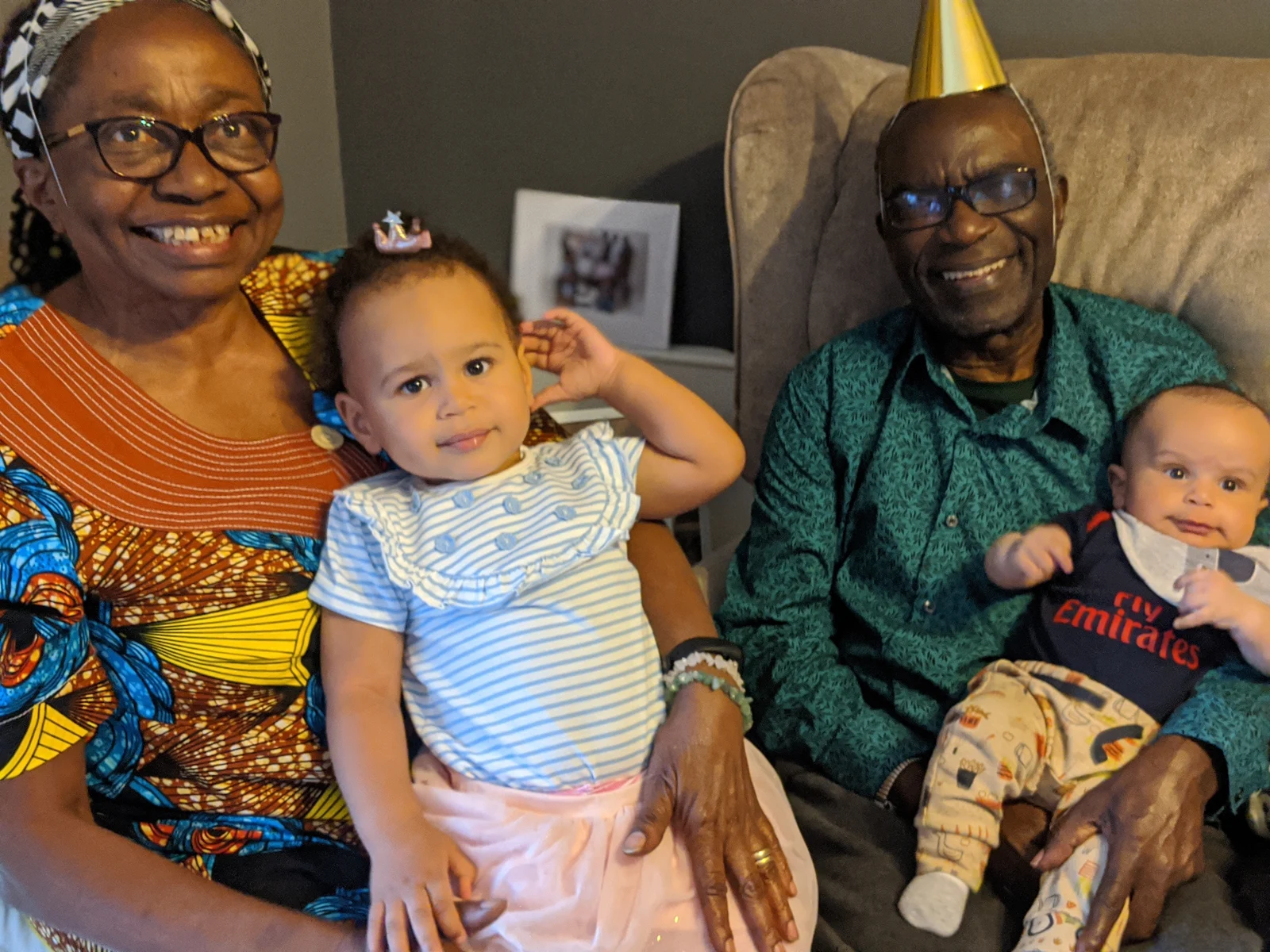
Family archive: 00100dPORTRAIT_00100_BURST20200524193222184_COVER.jpg.
Paddy Kwira Kabagambe died on 7 November 2020. The foundation brochure remembers a life of service followed by twenty-two years in which illness and care reshaped his public and family life.
The records preserved by the family do not narrate every stage of his final years. What they do establish is the enduring place of family, faith and community in the way he was remembered. The photographs and messages of gratitude accompany a life whose meaning outlasted his working appointments.
His children, relatives and friends chose to continue his community work through the Paddy Kabagambe Memorial Foundation. The brochure describes that shared effort as a way of honouring his generosity through service.
The years since his passing have brought two medical camps, a memorial lecture and computer laboratory launch at Karambi, support for the school soccer team, and the donation of Isango medical centre to South Rwenzori Diocese. His memory continues through practical service.
PKMF brochure, page 2; Daddy’s Biography, PDF pages 17–18; foundation activity records.
On 5 November 2022, family and friends gathered under PKMF for the inaugural memorial medical camp at Nyakahya Church of Uganda, Bwera. Its report records 641 attendees and services including blood pressure and blood sugar screening, consultations, health education and medicines.
The medical camp continued an established concern in Paddy’s life: bringing healthcare closer to communities that faced difficulty reaching it. The attendance figures describe the day’s work; they are not a count of people cured or a measure of lasting health outcomes.
A separate Kiyonga Medical Camp at Buhatiro on 13 December 2025 registered 342 clients. Members of the Kiyonga and Kabagambe families and health professionals joined in the effort. Together, these records show service taking practical form across different occasions.
2022 memorial camp report; 2025 Kiyonga camp report. The two camps have separate records and organising contexts.
On 11 November 2023, the memorial lecture was held at Karambi Secondary School, where Paddy had been a founder member. The family confirms that a computer laboratory was launched and a jersey was presented for the school’s soccer team on that occasion.
Education and sport had both mattered to him. His own CV records the promotion of soccer and boxing within enterprises he led, while the family manuscript places education at the centre of his responsibilities as a father and community supporter.
The occasion connected that history with the school’s present life. A memorial could invite reflection while also giving students something useful: a place to learn with computers and a shared identity on the playing field. No transcript of the lecture is supplied, so this account does not invent a speaker’s words.
Family confirmation, September 2026; Karambi plaque dated 11 November 2023; foundation event records.
On 23 November 2024, the Isango medical centre was donated and handed over to South Rwenzori Diocese. The family identifies the officiants as Bishop Nason Baluku, Hon. Dr. Crispus Kiyonga and Mrs. Mary Kunihira Kabagambe.
In a photograph of the celebration, Mary cuts a cake with the bishop. The image places his family beside the church institution entrusted with continuing this part of the community legacy.
The handover recalls the practical purpose of the facility Paddy established: care closer to people living in a place where roads and rain could make travel difficult. This book records the confirmed occasion without making claims about present staffing, clinical services or legal terms that are not contained in the supplied record.
Family confirmation of donation, officiants and photograph; Isango handover archive.
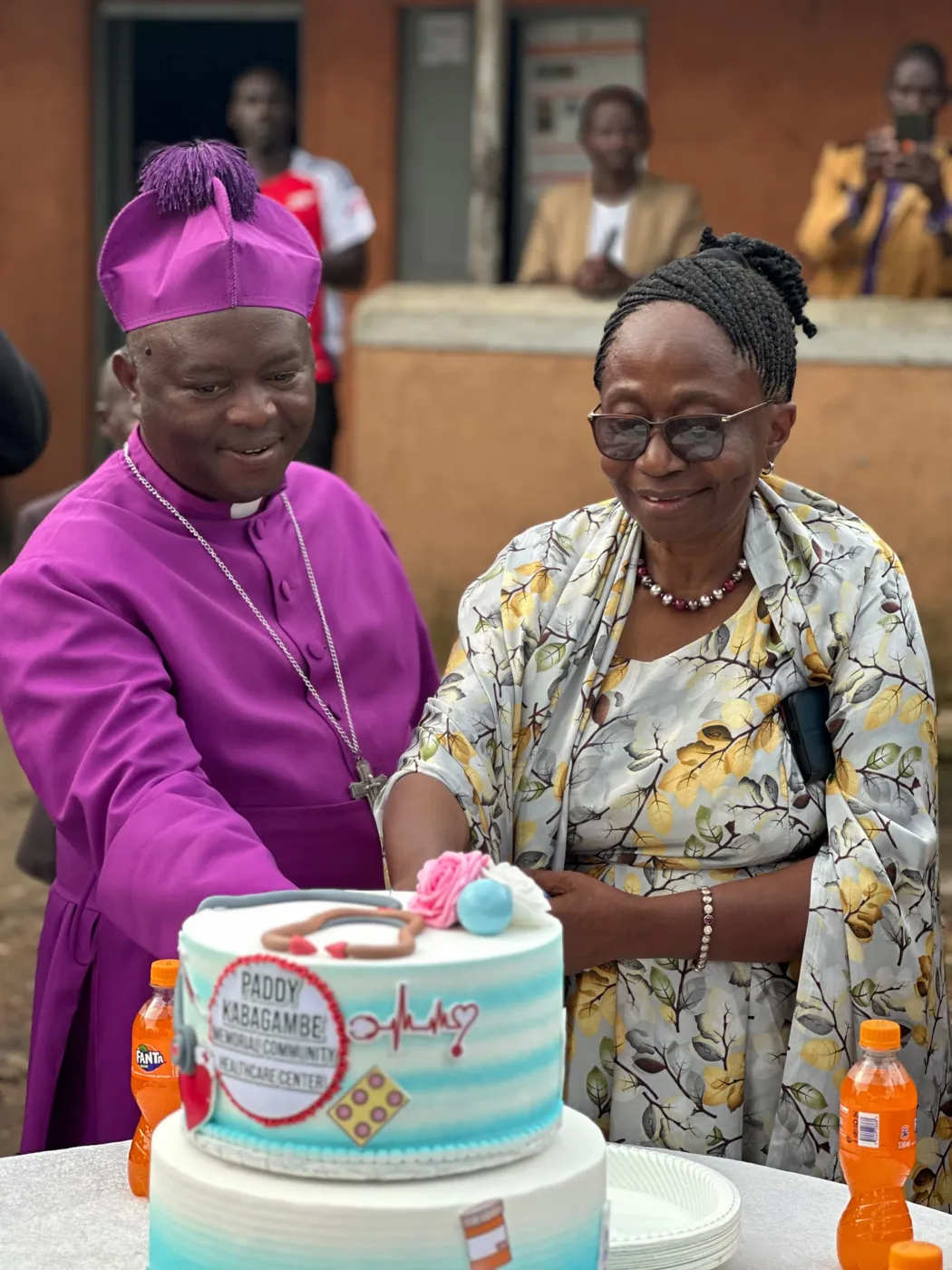
Isango event photo folder; identities confirmed by the family, September 2026.
A life of industry can be recorded in appointments, production lines and the number of people an enterprise employed. Paddy’s papers contain that record. They also point beyond it: to a scholarship, a school, a dispensary and the welfare of people whose lives touched his work.
At home, the measure was different but connected. Books were bought. School journeys were made. Music played. Friends were welcomed. When illness changed what he could do, the family remembers his patient recovery and his desire to contribute again.
The foundation carries his name into another generation. Its meaning will continue to be shaped by what people do with it: the care they make accessible, the opportunities they support and the attention they give to one another.
Paddy Kwira Kabagambe’s story ends as a life. It continues as an example of community service.
The family manuscript Daddy’s Biography supplies the personal narrative. Paddy’s curriculum vitae, dated March 1998 in Kampala, gives his education, training, employment, board responsibilities and community contributions.
The accompanying archive includes Nytil’s letter of 2 September 1971; the University of Nairobi Bachelor of Science certificate; the 1967 Higher School Certificate; the 1992–1993 RVB management diploma; and a handwritten Father’s Day card.
The foundation’s records and family-confirmed event details document the 2022 memorial medical camp, 2023 Karambi memorial lecture and computer laboratory launch, 2024 Isango handover, and 2025 Kiyonga Medical Camp.
Historical figures and appointments are attributed to their records. The MBA is described as study in progress in March 1998, not as an awarded degree. More family photographs, relationship confirmations and later-life accounts will enrich future editions.
Source collection reviewed September 2026. The misidentified photograph rejected by the family is excluded.
| Date | Recorded milestone |
|---|---|
| 1946 | Born in Isango on 25 September. |
| 1962–1967 | Nyakasura; Uganda Technical College, Kyambogo. |
| 1968–1971 | Chemistry and Geology, University of Nairobi. |
| 1971 | Nytil invitation, 2 September; joined 1 October; BSc certificate, 26 October. |
| 1974–1975 | European textile training; LTI and Nytil Works Manager in 1975. |
| 1978–1981 | General Manager, African Textile Mill, Mbale. |
| 1982–1985 | General Manager, Hima Cement Factory. |
| 1986 | Co-founded Standard Technical Services. |
CV, certificates, family manuscript, brochure and event records. Dates do not imply uninterrupted appointments beyond the record.
| Date | Recorded milestone |
|---|---|
| 1991 | Eleven months as General Manager, Print Pack. |
| 1992–1998 | Return to Nytil as MD, recorded through the March 1998 CV. |
| 1992–1993 | RVB executive management programme. |
| 1996 | Marriage to Mary on 7 December, as dated in the family draft. |
| 1998 | First stroke, 22 December, as dated in the family account. |
| 2003 | Moved to England with Mary; rehabilitation and later return to work. |
| 2020 | Died on 7 November. |
| 2022–2025 | Memorial camp; Karambi lecture; Isango handover; separate Kiyonga camp. |
CV, certificates, family manuscript, brochure and event records. Dates do not imply uninterrupted appointments beyond the record.
The family’s DOCX manuscript and its PDF counterpart were reviewed alongside the March 1998 CV and the foundation’s subsequent event records. The story retains the substance of the documented professional, family and community chapters, with a chronology and an epilogue connecting his life to the work carried forward.
The draft’s unwritten headings include later strokes, hospitalisations, salvation, experiences of faith, sight and memory, the death of his mother and fuller wedding and travel accounts. The materials supplied do not contain enough narrative to write those episodes responsibly. The present book is a completed edition of the available record, not a claim to know every event of his life.
Unsupported superlatives, uncertain medical explanations, private information about other people and an inconsistent football-event date have not been reproduced. The Nytil letter is an interview invitation; the MBA was still in progress at the CV date. No unconfirmed family-tree branches are inferred from the draft diagram.
Further verified family accounts can extend a future edition without changing what is already documented here.
Editorial review, September 2026.
Use arrows, your keyboard or swipe to turn the page.
An illustrated family edition drawn from the manuscript, CV, archival documents and community records.
You’re offline. Reading the saved edition.